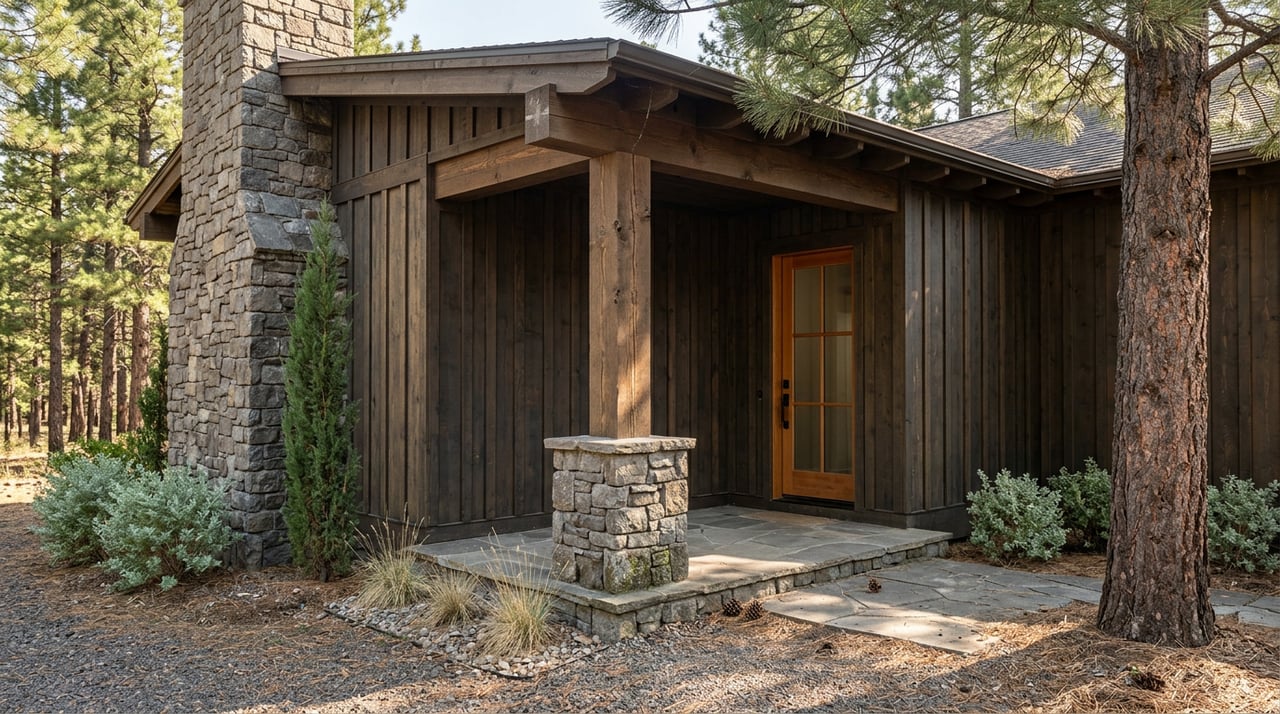
Saturday morning at the corner of Shoup and Black Forest Road looked the way it has for 57 years. Wool spinners set up their wheels under the ponderosa pines. A parade route filled in along the shoulder. Somewhere behind the Community Center, someone was building an outhouse fast enough to race it. By the time the pancake breakfast wrapped up, the Black Forest Festival had done what it does every August: pulled thousands of people into a patch of forest that has no stoplight, no downtown, and no chamber of commerce running the show.
The festival's 2026 theme, "Stars, Stripes and Tall Pines," marked the nation's 250th year and Colorado's 150th. But the number that actually explains Black Forest isn't 250 or 150. It's 57, the age of a festival that has outlasted most of the retail centers, franchise restaurants, and planned-community amenities built anywhere near it in that same stretch of time. And once you notice that, the rest of the neighborhood's calendar starts to make a different kind of sense.
The Building That Never Needed an Upgrade
The Black Forest Festival is staged at the Black Forest Community Center, home to the Black Forest Community Club, which was chartered in 1929 as a social organization for local families. The club still meets in the same log building at Shoup and Black Forest, a structure that is more than 80 years old and was built and maintained by the community itself rather than a developer or a parks department. Membership costs $15 a year.
That figure is worth sitting with. Fifteen dollars doesn't cover much anywhere else in Colorado Springs. Here, it buys access to a monthly newsletter and a stake in an organization that runs the region's biggest annual event with a volunteer team rather than paid event staff. The festival itself is organized entirely by volunteers, which is also why booth space and parade slots are still handled through the Community Club directly instead of a ticketing platform.
This isn't nostalgia dressed up as charm. It's an actual operating model, and it shows up in how everything else around it runs.
Why the Best Kitchen in the Forest Keeps Odd Hours
Drive to Black Forest Bistro on a Tuesday night expecting dinner and you'll find the lights off. The restaurant, tucked into Shoup Road, is open for dinner just a few evenings rather than seven.
Compare that to Black Forest Brewing Company a few minutes up the road, open daily and functioning less like a restaurant and more like a living room. The brewery hosted its Biergarten Fundraiser the Friday before the festival and ran its own Pinewood Derby the same Saturday night. Two food-and-drink businesses less than five minutes apart, running on completely different hour structures.
Mountain View Cafe and Catering and R&R Coffee Café follow a third pattern entirely: daytime hours built around breakfast and lunch, pastries made from scratch, coffee roasted on site.
A Farmers Market With One Rule
Every Saturday from 9 a.m. to 1 p.m., the Backyard Market sets up at 6845 Shoup Road with more than 70 vendors, live music, and a standing rule that the produce has to be grown in Colorado. Not sourced through a distributor. Grown here. That single restriction is why the market functions less like a retail event and more like a supply chain decision the community made on purpose, one that keeps dollars circulating among local growers rather than passing through a regional warehouse first.
A few of the market's fixed points, if you're building a weekend around it:
| What | When | Where |
|---|---|---|
| Backyard Market (farmers market) | Every Saturday, 9 a.m. to 1 p.m. | 6845 Shoup Rd |
| Black Forest Line Dance Classes | Ongoing, donation-based | Black Forest Community Center |
| MRES Community Carnival | Thursday, Aug. 27, 5 p.m. | Meridian Ranch Elementary School |
| Black Rose Society concerts | Recurring | Black Forest Community Center |
That line dance class is worth a closer look. It's going into its fourth year, taught by Mack Sharp with help from Yong Sharp and Denny Hassey, and it runs on donations that go straight back to keeping the Community Center building open. No studio franchise, no monthly membership fee, just neighbors teaching neighbors and passing a hat for maintenance costs.
The Trails Nobody Had to Widen
Black Forest Regional Park sits on 385 acres at 4800 Shoup Road and has been under El Paso County's care since 1977. It offers roughly four miles of marked trail across three color-coded loops, orange, white, and yellow, wide enough in places for horseback riders and narrow enough elsewhere to feel like a private walk through the pines. The Black Forest Trails Association, a volunteer group, is the reason those trails stay marked and passable rather than simply overgrown.
A few miles away, Fox Run Regional Park covers 417 acres with its own four miles of trail, two ponds, and five picnic pavilions. It also hosts more than 100 weddings a year, which tells you something about how residents actually use the space: not as a pass-through on the way to somewhere else, but as a destination in its own right.
Neither park has been widened, paved over, or redeveloped into something flashier as the surrounding area has grown. They've been maintained, by the same volunteer logic that keeps the Community Club running and the festival free of a corporate title sponsor.
Reading the Calendar Correctly
If you're new to Black Forest, or new to actually paying attention to it, the mistake is watching for the same signals you'd watch for anywhere else: a restaurant's grand opening, a store's seasonal sale, a chain's marketing push. Those signals barely exist here, and when they do show up, like Avanterra Black Forest leasing its new single-family rental homes at Woodmen and Black Forest Road, they tend to be the exception rather than the rhythm.
The actual rhythm is set by the Community Club's event calendar, the Trails Association's maintenance schedule, and a farmers market that answers to its growers rather than a corporate office. Watch that instead, and Black Forest stops looking quiet and starts looking organized, just not in a way that shows up on a storefront sign.
None of this requires a festival to prove it. It shows up every single Saturday at the Backyard Market, in the Bistro's limited dinner schedule, and in every mile of trail the Association keeps clear without being asked twice.
If you're already living here and want to understand what your specific pocket of Black Forest is worth, or you're weighing whether this rhythm is one you'd want to build a life around, The Lauber Group knows this neighborhood at the level of detail that took writing this piece to uncover. Reach out when you're ready for a conversation grounded in how the community actually works, not just what the listing photos show.