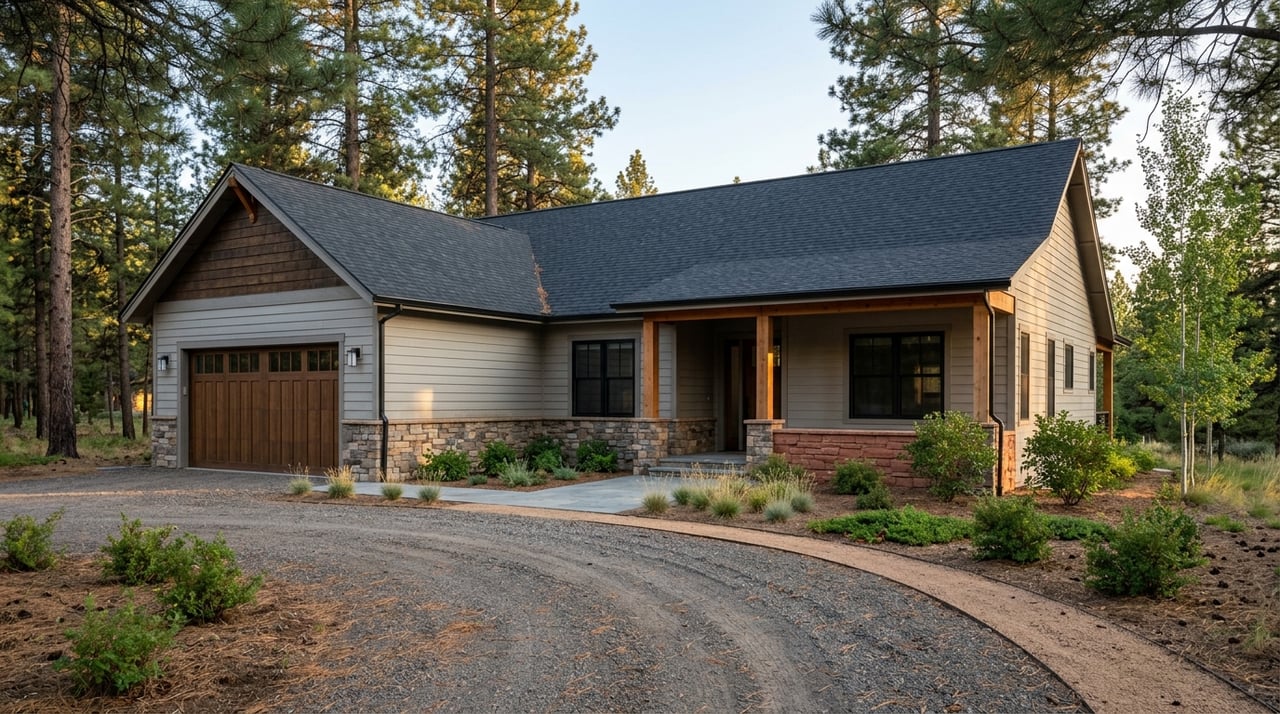
Thinking about building a custom home in Black Forest? It is an exciting idea, but it is rarely as simple as buying a lot and picking a floor plan. In this part of El Paso County, the land, utilities, access, and review process can shape your budget and timeline as much as the house itself. If you want to plan smarter and avoid costly surprises, this guide will walk you through the big decisions before you build. Let’s dive in.
Black Forest lot search starts differently
Black Forest is an established rural-residential market, not an area with a large supply of ready-to-build vacant lots. County planning materials describe much of the area as Large-Lot Residential, where homes generally sit on parcels of 2.5 acres or more.
The Black Forest Preservation Plan also points to roughly 5-acre parcels in timbered areas and 2.5-acre parcels in many other areas. That matters because your options may come from existing acreage lots, limited lot splits, or planned developments with building envelopes and open space, rather than from fully improved homesites.
Parcel size is only one part of the story. County reports show a mix of parcel sizes across the planning area, which means access, topography, and buildability can vary widely from one property to the next.
Buildability matters more than raw acreage
A lot may look ideal online and still come with major limitations. In Black Forest, it is smart to evaluate the full picture before you commit to land.
Here are a few buildability questions to ask early:
- Is there legal access to the parcel?
- Is the road public or private?
- If the road is private, is there a recorded maintenance agreement?
- Does the lot have an existing well permit or will you need a new one?
- Is there an existing septic system or room for a new onsite wastewater system?
- Are there building envelopes, setback limits, or covenant restrictions?
- Will wildfire mitigation requirements affect where or how you build?
When you buy acreage, you are not just buying square footage. You are buying the site conditions, utility path, and approval process that come with it.
Water is often the first major hurdle
For many Black Forest custom builds, water is the biggest feasibility question. Colorado requires a permit for every new groundwater well, and the Division of Water Resources says complete well permit applications can take up to 49 days to review.
That timeline is only one piece of the water picture. In subdivision review, El Paso County applies a 300-year water-supply standard, and county planning materials show growing demand alongside flat supply in the region.
This does not mean a build is not possible. It does mean water due diligence should happen early, because it can affect cost, timing, and whether a parcel fits your goals.
If a property already has a well, you still want to confirm the permit details and current status. If it does not, you should plan for the permitting process as part of your timeline.
Septic and utilities are parcel-specific
In Black Forest, you should never assume utilities are in place just because a lot has nearby homes. County materials for area subdivisions show that service setups can include private wells, onsite wastewater treatment systems, electricity from Mountain View Electric Association, and either natural gas or propane.
That mix varies by parcel. Some lots may have portions of the utility work completed, while others may need significant site development before construction can start.
Septic planning deserves close attention. El Paso County Public Health regulates onsite wastewater treatment systems locally for systems with flows of 2,000 gallons per day or less, and as of January 1, 2024, permit applications must be submitted by a licensed installer.
Private well water also comes with ongoing owner responsibility. Government agencies do not monitor private well water, so homeowners are responsible for periodic testing.
Access and road agreements can affect your risk
Access is easy to overlook when you are focused on views, trees, and floor plans. But in rural-residential areas, legal access and road maintenance can become major ownership issues if you do not review them upfront.
County staff reports for Black Forest properties have noted private gravel roads with recorded maintenance agreements. That is a practical reminder to verify how you will reach the home, who maintains the road, and what costs or obligations may come with it.
A beautiful parcel is much easier to enjoy when the access is clear on paper, not just visible on a map.
Covenants can shape what you build
Black Forest acreage is not automatically a no-rules environment. Some subdivisions and planned developments include recorded covenants, architectural review, accessory-structure limits, and building envelopes.
In one local PUD example, construction outside the designated building envelope required approval, and certain accessory uses and outdoor storage items were restricted. These rules are subdivision-specific, but they are common enough that covenant review should be part of your land search.
Before you fall in love with a lot, confirm whether the documents limit:
- House placement
- Outbuildings or accessory structures
- RV or trailer storage
- Fencing details
- Livestock or animal-related uses
- Exterior review and approval steps
These restrictions do not always stop a project, but they can change your home design, site plan, and timeline.
Wildfire planning is part of the build process
Wildfire mitigation is a core part of planning in Black Forest. El Paso County’s wildfire mitigation policy says staff uses vegetation mapping to determine whether a wildland fire and hazard mitigation plan is required.
When required, that plan must address fuel management, defensible space, and structure hardening. The county policy also states that the 2025 Colorado Wildfire Resiliency Code goes into effect on July 1, 2026 for buildings and structures in the wildland-urban interface.
Local fire agencies also treat mitigation as an active planning issue. Black Forest Fire Rescue notes that much of the district sits in the urban interface and offers free Firewise assessments and rapid wildfire risk assessments.
Colorado State Forest Service guidance breaks defensible space into three zones:
- 0 to 5 feet from the home
- 5 to 30 feet from the home
- 30 to 100 feet from the home
This is not a one-time checklist item. Defensible space requires ongoing maintenance after move-in as well.
Budget for the site, not just the house
One of the biggest mistakes buyers make is budgeting for construction and underestimating site work. National NAHB data shows the average construction cost of a typical single-family home at $428,215, or about $162 per square foot, with an average finished-lot cost of $91,057.
Those numbers are national, not Black Forest-specific. Still, they show why lot cost and site development matter so much when you are planning a custom build.
In Black Forest, your all-in budget may include:
- Land purchase
- Driveway and access work
- Grading and drainage
- Well drilling and pump equipment
- Septic design and installation
- Utility extension or hookup work where available
- Wildfire mitigation work
- County fees and permits
El Paso County’s road impact fee schedule lists $4,101 for a single-family detached dwelling under the standard fee schedule. That is just one line item, but it helps show why your final budget should account for much more than the builder contract alone.
Timelines are usually longer than buyers expect
Custom home timelines in Black Forest often depend on the land as much as the build. The process can involve county planning review, water-supply review, well permitting, OWTS permitting, PPRBD building review, and wildfire review.
NAHB says the average time to complete a single-family home was 10.1 months in 2023. In Black Forest, a practical planning assumption is often 12 months or more from lot purchase to occupancy, especially if the parcel needs access work, covenant approvals, or additional water-related review.
The key is to plan with flexibility. A realistic timeline can help you make better decisions about financing, housing overlap, and move planning.
A smart Black Forest build strategy
If you are serious about building in Black Forest, it helps to approach the process in the right order. Start with feasibility, then move into design and construction.
A practical planning sequence looks like this:
- Identify a parcel that fits your location and acreage goals.
- Review access, road agreements, and basic site conditions.
- Verify well, septic, and utility feasibility.
- Review covenants, building envelopes, and subdivision rules.
- Understand wildfire mitigation requirements.
- Build an all-in budget that includes site work and fees.
- Move forward with your builder and approval path once the lot makes sense.
That kind of front-end work can save you time, money, and frustration later.
Why local guidance matters
A Black Forest custom build is not just a home search. It is a land, feasibility, and planning process that benefits from local market knowledge.
Because lot conditions vary so much from parcel to parcel, having broker-led guidance can help you ask the right questions before you buy. That is especially valuable if you are relocating, working on a tight timeline, or comparing a build against purchasing an existing home in the Pikes Peak region.
If you are weighing your options in Black Forest, The Lauber Group can help you evaluate land opportunities, compare build-versus-buy scenarios, and move forward with clear local insight.
FAQs
What makes Black Forest custom home lots different from standard subdivision lots?
- Black Forest lots are often part of a rural-residential landscape with larger parcels, parcel-specific utility setups, and varying access, covenant, and wildfire considerations.
What should you verify before buying land in Black Forest?
- You should confirm legal access, road maintenance agreements, well status or well permit needs, septic feasibility, utility availability, recorded covenants, building envelopes, and wildfire mitigation requirements.
How long does a Black Forest custom home build usually take?
- While national averages for single-family construction were 10.1 months in 2023, a Black Forest build often takes 12 months or more from lot purchase to occupancy because site and review work can add time.
Do Black Forest lots usually have public water and sewer?
- Many properties in Black Forest rely on private wells and onsite wastewater treatment systems, though some developments may have central utility service, so each parcel should be verified individually.
Are there wildfire rules for building a home in Black Forest?
- Yes. Depending on the parcel and vegetation conditions, El Paso County may require a wildland fire and hazard mitigation plan, and wildfire resiliency standards are part of the local planning landscape.
Can covenants limit what you build on acreage in Black Forest?
- Yes. Some subdivisions have rules covering building envelopes, accessory structures, outdoor storage, and review approvals, so you should read recorded documents before purchasing land.